

Selecting the right antenna is essential to building a reliable and efficient wireless system. Whether you’re designing a short-range IoT sensor or a long-distance communication link, the antenna plays a pivotal role in determining signal quality, range, and regulatory compliance. Yet, with dozens of specifications and types to choose from, selecting the best antenna can be confusing.
This guide will walk you through the most important considerations to help you make the right antenna selection for your application – from fundamental system needs to environmental conditions and certification requirements.
Start with the Application

The selection process begins with a clear understanding of the application. Antennas used for fleet tracking, environmental sensors, remote video streaming, or industrial automation each have different performance requirements. Is the system mobile or stationary? Will it communicate with one fixed base station or multiple dynamic nodes? What range is needed? And what kind of data will be transmitted – low-bandwidth telemetry or high-throughput video?
Answering these questions helps you define the operational context. Once the communication architecture is clear – such as point-to-point, point-to-multipoint, or mesh – you can move on to the specific electrical and physical requirements of the antenna.
Know Your Frequency and Bandwidth
Antennas are designed to operate at specific frequencies, so it’s critical to match the antenna’s design band with your system’s transmit and receive frequencies. For example, an antenna optimised for 868 MHz LoRa won’t perform well at 2.4 GHz Wi-Fi. Beyond centre frequency, you’ll need to ensure the antenna provides enough bandwidth to cover the entire spectrum used by your application.
Applications that use frequency hopping or wideband modulation, like LTE or some Wi-Fi protocols, require antennas with sufficient bandwidth to avoid performance degradation or signal clipping.
Understand the Environment

The physical environment in which your antenna operates will affect its performance as much as its electrical characteristics. For outdoor systems, the line-of-sight (LOS) between transmitter and receiver is ideal, but rarely guaranteed. Trees, buildings, terrain, and even weather conditions like rain or fog can attenuate or reflect signals.
For instance, vegetation heavily attenuates high-frequency signals (like 2.4GHz), making UHF or sub-GHz bands more suitable for forested areas. Urban environments introduce multipath interference and require antennas that either tolerate or exploit it, such as diversity or circularly polarized antennas.
Key factors to consider:
- Distance between transmitter and receiver
- Terrain and elevation
- Vegetation density
- Presence of buildings or reflective surfaces
Testing in real-world conditions, or simulating the deployment environment, is often necessary to validate antenna performance.
Choose the Right Radiation Pattern
An antenna’s radiation pattern describes how it distributes energy in space. The pattern determines the coverage area and directionality of your signal. Broadly, antennas fall into two categories: omni-directional and directional.
Omni-directional antennas radiate equally in all horizontal directions and are ideal for mobile applications or scenarios requiring 360° coverage, such as Wi-Fi access points or moving vehicles. Directional antennas, such as patch, Yagi, or parabolic antennas, focus energy in one direction, improving range and signal strength in that direction while reducing interference elsewhere.
Balance Gain and Coverage
Antenna gain, expressed in dBi, measures how effectively the antenna focuses radiated power in a particular direction. Higher gain antennas focus more energy more tightly, improving range but narrowing the beamwidth. Lower gain antennas offer broader coverage but shorter reach.
In point-to-point links, high-gain directional antennas can provide excellent range and link quality. In contrast, systems needing coverage over a wide area – like base stations or mesh networks – may benefit more from low-gain omni antennas.
Consider Antenna Placement and Mounting
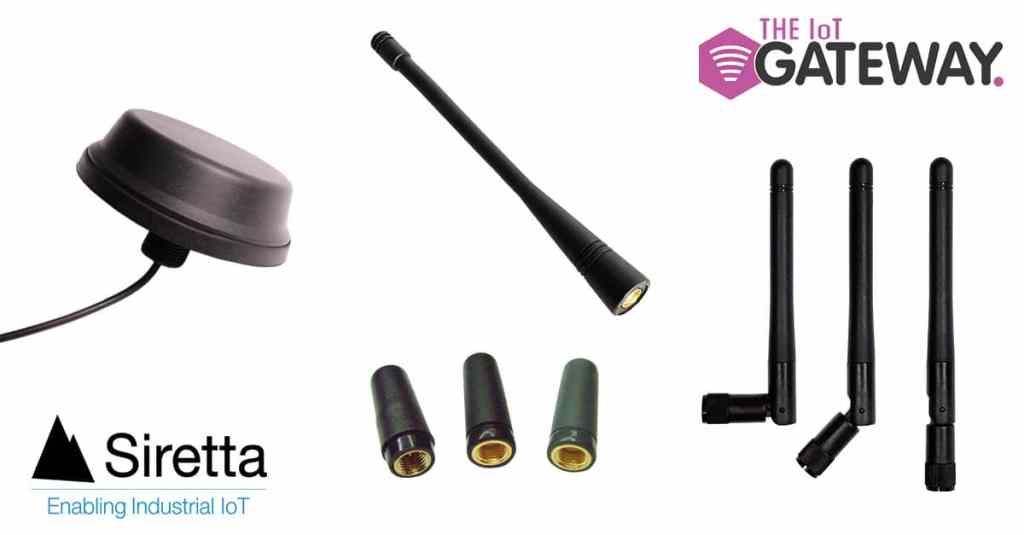
Where you place the antenna matters. Proximity to metal surfaces, batteries, circuit boards, or enclosures can detune or block the antenna. For internal antennas, such as chip or PCB traces, you must carefully follow layout guidelines and use a properly tuned ground plane. External antennas offer better performance and flexibility, especially in harsh or complex environments.
Antenna orientation must also match the intended radiation pattern and polarization. Antennas can be mounted using various methods – SMA connectors, magnetic bases, adhesive pads, or pole mounts – depending on whether the device is mobile, temporary, or permanently installed.
Match Polarization
Polarization refers to the orientation of the electric field of the radiated signal – most commonly linear (vertical or horizontal), but sometimes circular. The transmitting and receiving antennas must have matching polarization to ensure efficient signal transfer. A mismatch can lead to losses of 20 dB or more.
Circular polarization is useful in applications with unpredictable orientation or movement, such as drones, RFID, or satellites, because it mitigates polarization mismatch and multipath fading.
Check VSWR and Impedance Matching
Efficient energy transfer between your RF circuitry and the antenna depends on impedance matching. Most systems are designed for 50-ohm impedance. If the antenna’s impedance doesn’t match, part of the signal reflects back toward the transmitter, reducing power transfer and potentially damaging components.
VSWR (Voltage Standing Wave Radio) indicates how well the antenna is matched. A VSWR of 1:1 is perfect, while 2:1 is typically acceptable. Beyond that, significant signal degradation may occur. If your antenna requires tuning or matching components, consider using a vector network analyser during development.
Work Within Physical Constraints
In many designs, the form factor and size of the device limit antenna options. Wearable, handheld, or embedded devices may not accommodate large external antennas. In such cases, compact chip antennas or flex antennas may be used, but they typically trade off efficiency and bandwidth for size.
The enclosure material also impacts performance. Plastic allows signals to pass through with minimal loss, while metal enclosures require special attention to aperture design or external antennas.
Ensure Regulatory Compliance
All wireless devices must comply with national and international standards for safety and interference. Organisations such as the FCC (USA), and CE (Europe) govern the allowable frequency bands, maximum output power, and emissions.
Importantly, many certifications are only valid when using a specific antenna type and gain. Using a different antenna than specified in the certified design can invalidate approvals and require retesting.
Putting It All Together
Antenna selection is not a one-size-fits-all process. It involves balancing technical requirements, environmental challenges, physical constraints, and legal considerations. Here’s a final summary of what to keep in mind:
- Understand the system’s application and communication needs
- Match the frequency and bandwidth
- Account for the operating environment
- Choose an appropriate radiation pattern
- Select gain based on desired coverage and range
- Plan for physical placement and mounting
- Match antenna polarization between ends
- Ensure impedance matching and low VSWR
- Design around physical constraints
- Confirm compliance with regulations and certifications
Simplify the Process with Siretta’s Antenna Selector Tool
Choosing the right antenna involves many variables, from mounting style and frequency bands to environmental rating and technology support. While this guide provides the foundational understanding you need, applying those criteria to a real-world product catalogue can still feel overwhelming – especially with dozens of similar-looking antennas available.
To make selection easier, Siretta offers a helpful Antenna Selector Tool that allows you to quickly narrow down antennas from their industrial-grade product range based on key criteria. This tool is ideal for engineers, integrators, and developers who want to translate technical requirements into compatible product choices without wading through spec sheets.
The tool allows you to filter antennas by several important parameters:
- Mounting Type – Such as magnetic, adhesive, wall/pole, or embedded
- Supported Technology – Including cellular, Wi-Fi, and non-cellular ISM bands
- GNSS/GPS Compatibility – With options for single- and multi-band satellite reception
- IP Rating – For ensuring suitability in outdoor or rugged environments
- MIMO or Multiport Support – Crucial for high-speed or failover-capable systems
Using the tool is straightforward – just select the features and technologies relevant to your project, and the tool will display a shortlist of antennas that match. Each result links directly to a detailed datasheet, saving you time and reducing the chance of selecting an antenna that doesn’t meet your needs.
Try the tool here: Siretta Antenna Selector Tool
Improving System Performance
The antenna isn’t just another component – it’s the bridge between your electronic system and the physical world. Choosing the right antenna can dramatically improve system performance, reduce power consumption, and ensure regulatory compliance. Taking the time to understand your application’s specific needs will save you time, cost, and headaches down the road.

How Environmental Considerations Affect Antenna Selection


Antenna Applications

A Guide to Impedance Matching

Antenna Types Explained: Mounting Styles and Applications

Understanding Key Antenna Parameters


Understanding Antenna Radiation Patterns

Understanding Electromagnetic Waves

Gateway: Your Franchised Distributor for Finder Products

Exploring IoT in Digital Twins & Building Information Modelling (BIM)

IoT in Construction: A Complete Guide