

Antenna mounting options influence the success of an antenna far more than you might expect. They affect installation time, mechanical strength, and the consistency of RF performance. For buyers and engineers with some experience, the differences can guide clearer choices and avoid unnecessary design issues. This article introduces Siretta’s main antenna types and outlines how each one fits into practical deployments.
Alpha – Adhesive Mount Antennas

Adhesive antennas are compact and straightforward to position. A thin layer of industrial adhesive holds the antenna on plastic or glass surfaces, which keeps the device clean and avoids drilling. They work well in indoor environments or sheltered enclosures where a low profile matters.
Common uses include smart metering, compact gateways, environmental sensors, and displays mounted against walls or panels. Their installation speed is one of the main attractions.
Representative models include:
- Alpha 14: A slim antenna suited to LTE, 5G, and NB-IoT applications where space is tight.
- Alpha 22: A compact multiband antenna covering 4G LTE, GPS/GNSS and Wi-Fi deployments.
- Alpha 41: A high performance wideband adhesive option built for stable cellular connectivity across varied device housings.
- Alpha 40: A flexible bipole antenna supporting 5G NR, dual band Wi-Fi, LoRa, and CatM/NB-IoT.
Adhesive antennas offer a tidy appearance and quick deployment, provided the mounting surface is clean and stable.
Delta – Direct Connect Antennas
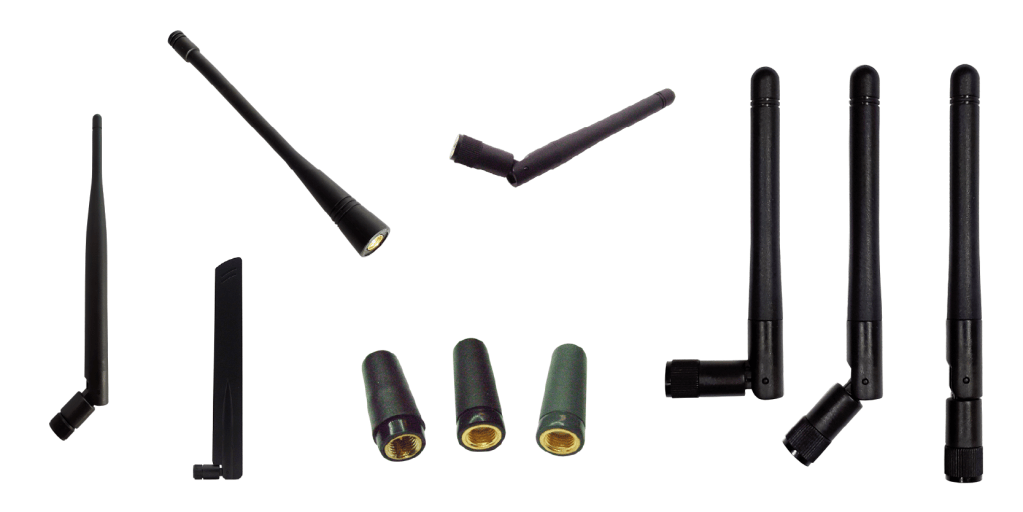
Delta antennas attach straight to the device through an SMA or similar connector. This direct approach keeps cable losses to a minimum and gives the installer a predictable, repeatable result. The hinge on many models allows the antenna to be angled away from metal surfaces that might otherwise degrade performance.
They often appear on industrial routers, control cabinets, and fixed-position networking equipment.
Examples include:
- Delta 2A: An omni-directional multiband antenna which can be used with Wi-Fi 6, 5G/4G, LTE CatM, and NB-IoT applications.
- Delta 7A: A robust terminal-mount antenna supporting LTE, 5G, Wi-Fi, and WLAN bands.
- Delta 8A: A compact ¼ wave antenna with a loaded helical stub, which can be used for Wi-Fi, Bluetooth and Zigbee applications.
- Delta 37: An omnidirectional monopole swivel blade antenna, offering full support for Wi-Fi 6e and Wi-Fi 7 bands, along with 5G NR and 4G LTE.
Direct connect antennas provide a stable mechanical fit and dependable RF performance, with simple replacement if required.
Echo – Embedded/PCB Mount Antennas
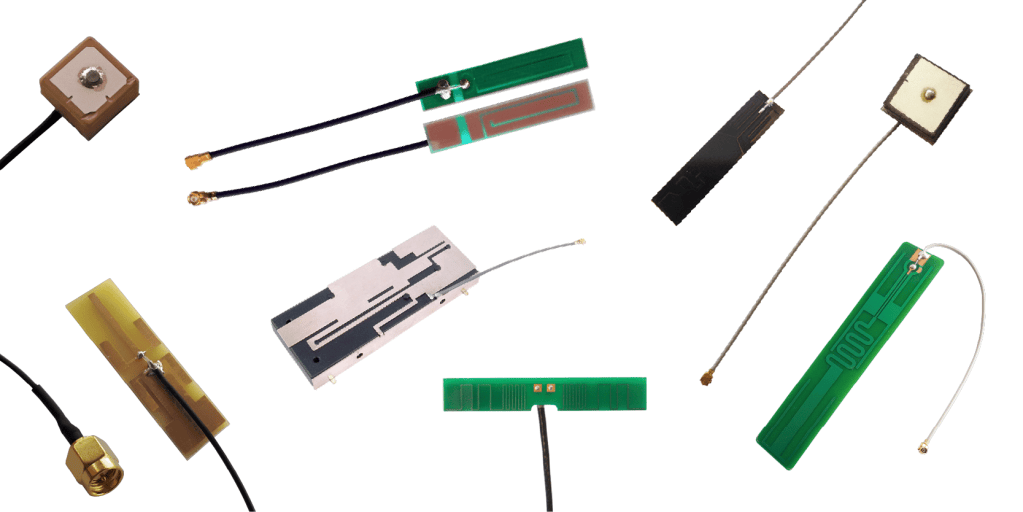
Echo antennas sit inside the device, either as a small module, a flex tail, or a printed PCB trace. They allow the product designer to keep the exterior clean and avoid protruding hardware, which is often important for handheld units and sealed enclosures.
They appear in wearables, compact IoT designs, handheld data terminals, and any product where internal space and overall finish are critical.
Relevant examples include:
- Echo 19: A miniature GPS antenna, ideal for applications where minimising space is crucial.
- Echo 35: Wideband ground plane independent PCB antenna with support for 5G, 4G, and Wi-Fi.
- Echo 28B: A flexible embedded option suited to Bluetooth, WLAN, Zigbee, and ISM technologies.
- Echo 18: An omnidirectional low-profile PCB antenna for Wi-Fi and Bluetooth applications.
Embedded antennas offer excellent integration, though they benefit from early design testing because the PCB and enclosure can shift their tuning.
Mike – Magnetic Mount Antennas
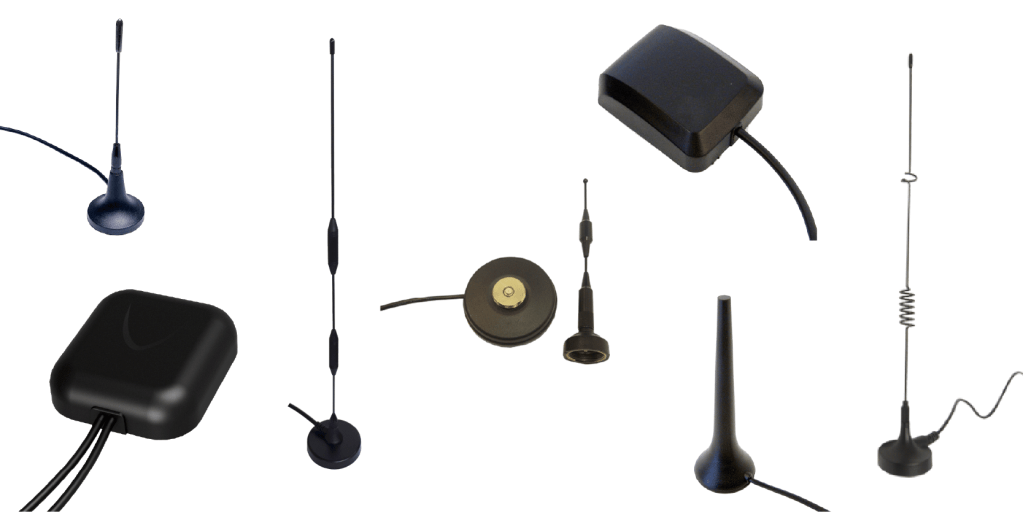
A magnetic base gives Mike antennas their character and flexibility. They grip firmly to metal, yet can be removed without tools, making them ideal for mobile and semi-permanent setups. The supporting surface also acts as a ground plane, which strengthens radiation efficiency, particularly for wideband cellular and GNSS.
You see them on vehicles, temporary monitoring stations, and any location where equipment needs to be moved or serviced regularly.
Typical models include:
- Mike 1A: A versatile antenna used in many ISM applications, as well as 5G and 4G support.
- Mike 2A: ½ wave omnidirectional antenna operating on quad band cellular networks.
- Mike 3A: Dual mount GPS antenna with both magnetic base and adhesive pad, meaning it can be mounted onto a diverse range of surfaces.
- Mike 12: ½ wave high gain whip antenna, supporting Wi-Fi, Bluetooth, and Zigbee frequencies.
Their strength lies in quick repositioning and strong performance on metal surfaces, with the caution that those surfaces should be kept clean to avoid scratching.
Oscar – Outdoor Wall/Pole Mount Antennas

Oscar antennas are built for the elements. They sit outdoors on walls, masts, railings, or equipment housings, delivering stable performance even in demanding conditions. Some are omnidirectional, others are directional panels or Yagis that push signal further or focus it more tightly.
These antennas support site-to-site links, cellular boosters, building entry points, and remote installations where indoor antennas fall short.
Typical models include:
- Oscar 1A: Omnidirectional monopole wall mount antenna, operating on global 4G/5G frequencies.
- Oscar 17: Lightweight monopole design, supporting dual band Wi-Fi, as well as Bluetooth, Zigbee, and ISM bands.
- Oscar 18: Yagi directional antenna with UV and water-resistant design, supporting 5G NR, 4G LTE technologies, along with LoRa, Sigfox, and Helium applications.
- Oscar 40 Pro: A rugged IP67 wideband outdoor antenna supporting 5G, 4G, LTE CatM, NB-IoT, and LoRa bands.
- Oscar 63: An ultra-wideband high-gain panel antenna which is designed for 4G, 5G, and Wi-Fi 6E / Wi-Fi 7 technologies.
These antennas require proper mounting and alignment, yet their reach and reliability make them essential for many outdoor deployments.
Tango – Through-Hole Mount
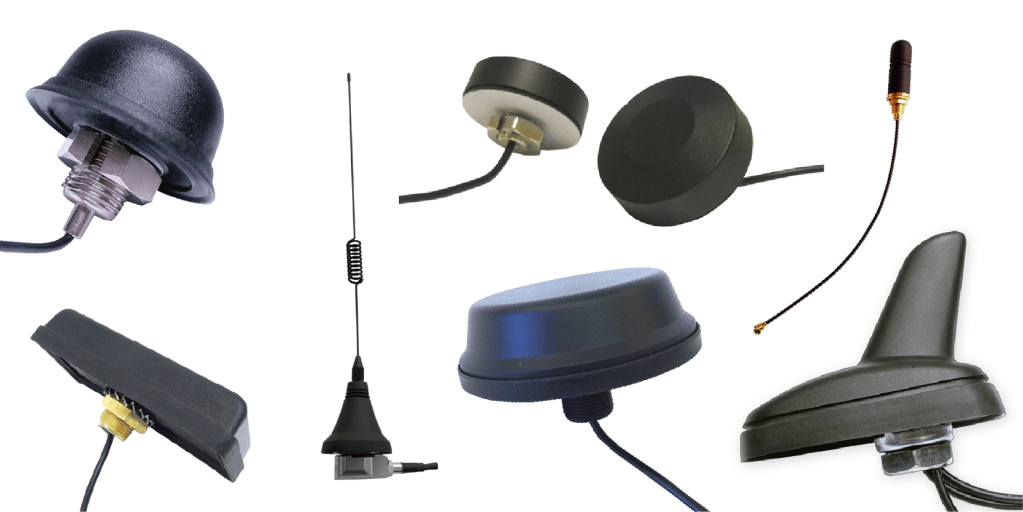
Tango antennas bolt through the wall of an enclosure, creating a mechanically secure and sealed connection. This style suits outdoor or industrial environments where vibration, pressure, or weather exposure would disrupt a lighter mount.
They are found on rooftop units, roadside equipment, external control housings, and any application that demands long-term resilience.
Examples include:
- Tango 17: With an anti-vandal design, this quad band antenna can be securely mounted both inside and outside.
- Tango 27: A compact, weather resistant puck antenna with IP67 rating. Can be left in unmanned locations for external use with IoT devices.
- Tango 47: MIMO 4G/GPS heavy duty screw mount antenna with IP65 rating, designed for vehicle IoT applications.
- Tango 44: Wide band puck antenna ideal for anti-vandal and covert applications, with support for 4G, 5G, ISM bands, Bluetooth, and Zigbee.
A through-hole antenna offers assurance, staying securely mounted and fully sealed once it is fitted.
Choosing the Right Antenna Mounting
Each mounting style offers clear strengths:
- Adhesive: Simple installation, discreet appearance.
- Direct Connect: Tight mechanical fit and low RF loss.
- Magnetic: Fast placement, ideal for mobile or temporary setups.
- Embedded: Internal positioning and clean product design.
- Wall or Pole: Outdoor range and long-distance connectivity.
- Through-Hole: Durable, sealed mounting for demanding sites.
For help choosing the right antenna for your application, take a look at Siretta’s Antenna Selector Tool.
Why Mounting Choices Matter
Understanding how each antenna type behaves in practice helps you make choices that support both performance and long-term reliability. Whether the priority is speed of installation, mobility, outdoor durability, or integration inside a compact device, the mounting method plays a central role. With these options in mind, you can match the antenna to the environment rather than forcing the environment to adapt to it.

How to Select the Right Antenna for Your Application


How Environmental Considerations Affect Antenna Selection

Antenna Applications

A Guide to Impedance Matching

Understanding Key Antenna Parameters


Understanding Antenna Radiation Patterns

Exploring IoT in Digital Twins & Building Information Modelling (BIM)

Waste and Fuel Management in Construction with IoT

Predictive Maintenance and Remote Machine Management in Construction Using IoT

Tool & Equipment Tracking in Construction Using IoT